The part of the Gates interview nobody is answering
 Zohaib Akhtar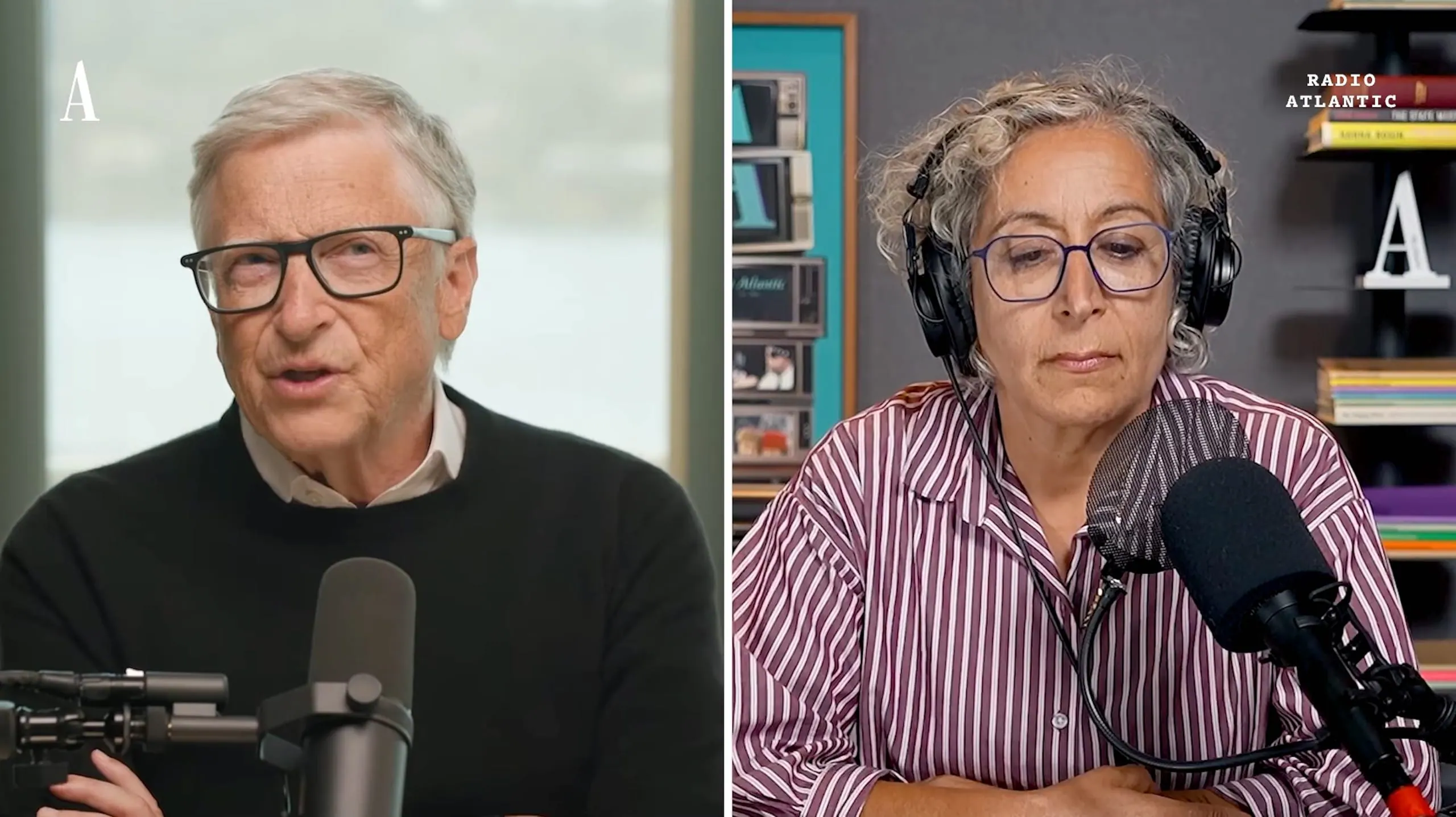
I watched the interview where Bill Gates says he has changed his mind on AI. Most of it is what you would expect. Capabilities arrived faster than he thought. Bioterror, cyber, jobs. But one complaint kept coming back, and it stayed with me longer than the scary parts did. He keeps saying that all we have right now is voluntary review with no criteria. The companies grade their own homework, and nobody has written down what the test should even be.
He says it almost like a challenge. And watching it, I kept thinking: I actually know what that test looks like. Not for everything. For medicine, the field I trained in.
Here is the strange thing about hospitals that nobody stops to notice. You can walk into one in a city you have never visited and hand your life to complete strangers, and it feels normal. Why? None of those people are trusted because they seem smart. Every one of them came through a chain. Exams, residency, an attending who made them justify every order out loud, a conference where their mistakes get taken apart in front of their peers. Medicine learned, slowly and after a great deal of harm, that seeming capable is not a standard. It made accountability the standard instead, and trust fell out the other side.
So when Gates asks what criteria would look like, I don't think the answer has to be invented from nothing. In medicine, at least, you can borrow it.
Start with the simplest possible test. If a system is going to influence what happens to a patient, ask it the same question twice. If it gives you two different answers, that alone should end the conversation. It sounds like an absurdly low bar. Most medical AI today cannot clear it.
Then ask it why, the way an attending asks why. Not for a paragraph that sounds reasonable, but for the actual basis. Which value, which threshold, what evidence. If the reasoning cannot be examined, it cannot be disagreed with, and something you cannot disagree with has no business near a patient.
Then the error rate, measured by someone else, on data the system has never seen. This is just the drug approval instinct. Nobody takes the manufacturer's word for it, and nobody should start now.
And when the system learns something new, and these systems will keep learning, that is the whole point of them, the new behavior waits. It runs silently, logs what it would have done, and a person decides whether it graduates. Medicine already does this to itself. A promising result waits for the trial, the trial waits for the guideline. It is slow, and it is also the reason your medicine cabinet doesn't kill you.
The objection is always innovation. It always is. But I think that objection blurs two different jobs into one. An AI that searches ten million records for patterns nobody has codified should be allowed to run wild, because being wrong most of the time is what hypotheses are for. It is the AI that acts on the one patient in front of it that needs the leash. Two jobs, different rules, and a door between them that only opens after review. Gates makes almost the same point about monitoring the models that can design dangerous molecules. It would cost the industry almost nothing. It is somehow still not being done.
I want to be careful about my own reach here. I have no idea what the equivalent list is for cyber weapons or biosecurity. Not my field, and I have grown suspicious of anyone who is fluent in every domain at once. But I notice that when Gates says the word criteria, everyone nods gravely and nobody writes anything down. In my corner of the world, the list is writable. Most of it is above, in about four hundred words.
And for what it's worth, I am not writing this as someone afraid of the technology. I build with it every day, and I got into this work because of what happens when medicine arrives late. I know what that costs. That is exactly why the criteria matter. The fastest way AI gets to actually help people, at scale, in the places hospitals and regulators and courts control, is for someone to show what accountable looks like, in public, where it can be checked. Medicine wrote that playbook about a century ago. Someone just has to pick it up.
Source: The Atlantic interview. ((Z))